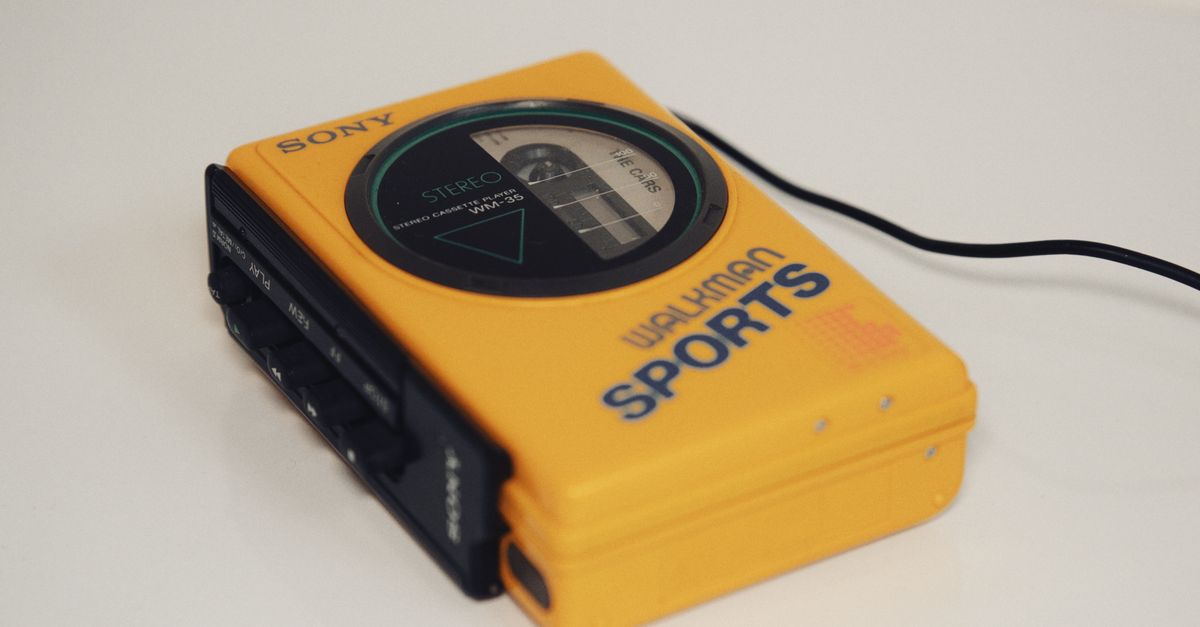
In July 1979, Sony released a small blue-and-silver cassette player in Japan called the Walkman TPS-L2. It could not record, it had no speaker, and many people inside the industry doubted anyone would want it. Within a few years, “Walkman” had become a household word around the world, and the idea of carrying your own soundtrack everywhere had changed music forever.
Key Takeaways
- The first Walkman, the TPS-L2, launched in Japan on July 1, 1979, and reached other markets over the following year under various names before “Walkman” stuck.
- It was built on Sony’s existing compact cassette technology and paired with lightweight headphones, which made personal stereo listening practical.
- The Walkman made private, portable listening normal, paving the way for later portable players.
- Vintage Walkmans often need new belts and careful cleaning to work again.
A player that could not record
Portable cassette recorders already existed, mostly for dictation and journalism. Sony’s idea was to strip out the recording function and the speaker, focus on stereo playback, and pair it with lightweight headphones.
The original model had two headphone jacks so two people could listen together, and a “hotline” button that lowered the music so they could talk through a built-in microphone. Those features reflected a worry that listening alone in public might seem antisocial.
The name
The name “Walkman” was considered awkward English by some. In early overseas markets, the player appeared under other names, such as “Soundabout” and “Stowaway.” Eventually Sony standardised on Walkman worldwide, and the word entered dictionaries.
Why it caught on
- Lightweight headphones made listening comfortable on the move.
- Cassettes were everywhere, and people already made mixtapes from records and radio.
- Jogging and fitness culture in the late 1970s and 1980s created demand for music on the go.
- Price drops and competition soon made personal stereos affordable for teenagers.
Sony and competitors produced countless models over the following decades, adding features like auto-reverse, Dolby noise reduction, radios and recording.
The cultural shift
The Walkman made it normal to create a private soundtrack in public spaces. Commuters, students and runners could choose their own music anywhere. Critics debated whether it isolated people; fans said it gave them control over their environment. The same debates would return with later portable music players and smartphones.
Keeping a vintage Walkman alive
Many old Walkmans fail for predictable reasons:
- Perished drive belts. Rubber belts stretch or turn sticky over decades. Replacement belt kits exist for many models.
- Dirty heads and pinch rollers. Clean with isopropyl alcohol and cotton swabs, gently.
- Corroded battery contacts. Never leave batteries inside for long storage.
- Worn capstan motors causing speed problems. Some models allow speed adjustment.
If you are not comfortable opening electronics, specialist repair services restore vintage players.
Collecting
Collectors look for:
- Early models such as the TPS-L2
- Distinctive designs and colours
- Complete sets with original headphones and boxes
- Working condition
Prices vary widely depending on model, condition and completeness. Check completed sales, not just asking prices.
Frequently Asked Questions
Can I still buy cassettes? Yes. New cassettes and new releases on cassette are made in small numbers.
Is a Walkman worth repairing? For sentimental or collectible models, often yes. Belts and cleaning are inexpensive fixes.
Why does my Walkman play too slowly? Usually a stretched belt or weak motor.
Did Sony stop making Walkmans? Sony ended production of cassette Walkmans in Japan in 2010 but continues to use the Walkman brand for digital players.
The bottom line
The Walkman turned recorded music into something personal and portable. A vintage one can still work beautifully today with new belts and a careful cleaning.